A Conversation with Advocacy Partner: Natalia Urtubey, Eastern Bank Foundation Fellow
“Our vision at MCCI + FBE is to eliminate structural barriers to racial equity, and we do this through ecosystem building and collaborating with partners to innovate for better outcomes.”
We had the opportunity to connect with Natalia Urtubey, Foundation Fellow at Eastern Bank Foundation, who shared the work she is leading to expand access to contracts and opportunities to BIPOC-, Women- and LGBTQ-owned businesses. Read her interview and learn more about MCCI + FBE’s role in supporting these crucial efforts.
Tell us about the efforts that you have led and are leading in advancing equity in our small business ecosystem?
Since joining Eastern Bank Foundation (EBF) in March of 2022, I have been laser focused on creating and beginning to execute a strategic plan that is aimed at helping BIPOC-, Women-, and LGBTQ-owned businesses in Boston and Massachusetts increase their economic mobility by expanding their networking power and the types and quality of contract bids they are aware of and involved in. At the same time, I am collaborating with other change makers to grow these small businesses’ access to capital and the people who manage that capital.
One example is serving as a founding and primary partner in the new CommonWealth Development Compact along with leaders at the Civic Action Project (CAP), Boston Society for Architecture, and Builders of Color Coalition. This Compact is designed to build equity and opportunity for businesses owned by people of color and women in the development and construction industry. To date, the mayors of Boston, Cambridge, Lynn, Salem, and Somerville have signed on to this pilot.
I am also working, in collaboration with leadership from community partners including MCCI + FBE, to establish a business growth task force focused on expanding small businesses through contracting and procurement matchmaking, acquisition, and better visibility for awarded projects to generate awareness and demand. Members of this task force will also share best practices and create shared policy recommendations to expand supplier diversity across the Commonwealth.
Prior to joining EBF, I served as the City of Boston’s Small Business Director, where I was heavily involved in supporting Boston’s small business community, including driving innovative grant programs during the COVID Pandemic. During this time, we distributed nearly $29M to over 6K businesses, we launched Boston’s first small business app B-local, and spearheaded the Reimagine Boston Main Streets initiative. The end goal of all these programs was to help small businesses stay in business and grow by promoting local shopping and supporting our neighborhood commercial districts.
Explain how you see Mill Cities Community Investments (MCCI) + Foundation for Business Equity (FBE) role in support these efforts?
EBF’s partnership and collaboration with the newly merged organization of MCCI + FBE is a strong and dynamic one. Our support started in 2017 with the creation of the FBE. EBF is proud to have incubated this work that has supported more than 100 businesses through their high-touch advisory program, the Business Equity Initiative (BEI). Since FBE’s merger with MCCI, we’ve remained a leading funder, and we have continued to work together closely. For example, MCCI + FBE is playing an important role in EBF’s development of the previously mentioned business growth task force. This task force is aimed at helping diverse BIPOC-, LGBTQ- and Women-run small businesses connect with buyers that are looking to build a more diverse supplier network — and vice versa. Doing this increases mutual awareness, communication, and collaboration that lead to contracts. As part of this Task Force, MCCI + FBE is providing expertise on business support, technical assistance, and capital access to help build a robust pipeline of businesses ready to take on more contracts.
What are the challenges and opportunities?
Procurement and B2B contracting is one of the best growth tactics for businesses. However, even where there is the political and industry good will to diversify supplier pipelines, buyers still struggle to connect with businesses outside their networks. On the flipside, small businesses owned by people color do not always know the key decision makers looking to diversify and can struggle to understand the traditionally closed processes to become vendors and compete for private contracts. As we developed our EBF strategy to advance equity in the small business ecosystem, we realized there was an immense opportunity to bring both the buyer and supplier sides to the table — to together fulfill their mutual interest in business growth and project excellence. We also knew that an important piece of this was to help smaller businesses gain access to more capital so they would be ready to onboard increased opportunity successfully.
What advice do you have for our small business owners?
Invest in your business to help sustain and grow it. This can come through seeking out and hiring experts to work with you that fill your expertise gaps, e.g., accountants or marketing professionals. Think about technology upgrades that increase efficiency and get the right people in to help you think through and execute that plan. It can also mean hiring someone to be solely in-charge of seeking and sourcing contract opportunities. With these investments working in concert, you can help expand your pipeline and be ready for new opportunities. This can seem overwhelming, but please know that you, as a small business owner, do not have to do everything alone. It might seem complicated or expensive but people and organizations like those at MCCI + FBE are available and eager to support you and provide the tools and expertise you need to take things to the next level.
Nectar Community Investments, a community development financial institution (CDFI), today announced the launch of the Clean Economy Fund, which provides low-cost financing at competitive interest rates for electrification, decarbonization and energy efficiency upgrades. The Fund’s benefits are twofold: Nectar will offer loans for small business owners to make improvements to their commercial buildings, and will provide working capital and equipment financing to small businesses that work in the sustainability and green energy fields
“Nectar has long been committed to supporting homeowners in Massachusetts as they complete energy efficiency upgrades on their homes. With the Clean Economy Fund, we can now apply those principles to our small business clients,” said Nectar Community Investments Executive Director Glynn Lloyd. “These dollars will open doors as they work to reduce their carbon footprint, unlock new growth and serve their communities.”
Thanks to support from the Black Renaissance Fund, an initiative of the African American Alliance of CDFI CEOs, Nectar has loan capital available to fund a variety of energy efficiency projects and to support small businesses in the sustainability field. To see examples of the types of projects and businesses, visit the Nectar website.
“We are proud to support Nectar Community Investments through the Black Renaissance Fund …
Great news for Massachusetts homeowners: the Massachusetts Community Climate Bank at MassHousing announced it has surpassed $5 million in Energy Saver Home Loan financing, helping residents cut energy use and boost the value of their homes. Nectar is a proud participating lender — and our Residential Services Director Lissette Paukert is quoted on the program’s impact.
Read the press release
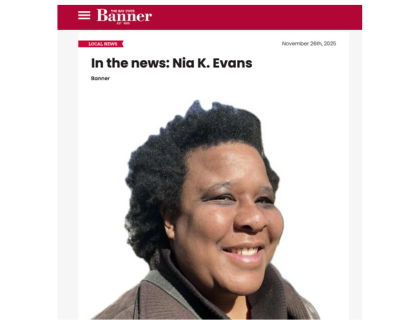
Nectar Community Investments has welcomed Boston Ujima Project Executive Director Nia K. Evans as a new board member to be part of their organization. Evans’ role at the Boston Ujima Project focuses on bringing together neighbors, workers, business owners and investors in Greater Boston to build a community-controlled economy. According to Evans, the Boston Ujima Project has “made history as the nation’s first democratically governed investment fund.”
Read the article